
What Is
Rye Whiskey?
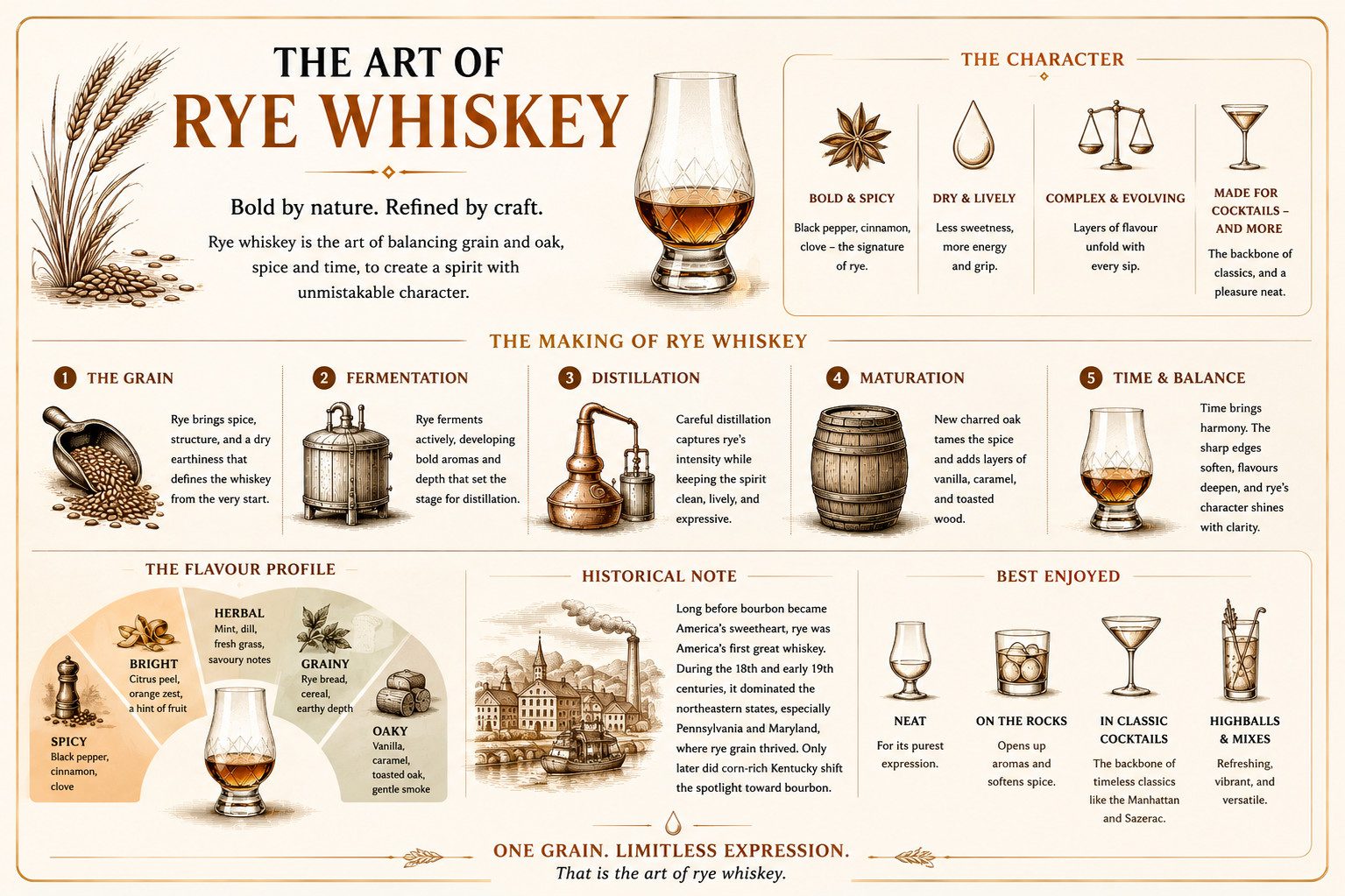
Rye whiskey is America’s spicier whiskey, crafted primarily from rye grain and known for its bold, peppery character. Dryer than bourbon yet full of complexity, it offers lively spice, herbal notes, and a vibrant expression of American whiskey.
Bold. Spicy. Unmistakably American.
Introduction
Rye whiskey is the spicy, assertive cousin of bourbon — an American whiskey made principally from rye grain and aged, like bourbon, in new charred oak. Where bourbon is sweet and rounded, rye is dry, peppery, and bold: a spirit with an edge, and a long and storied past.
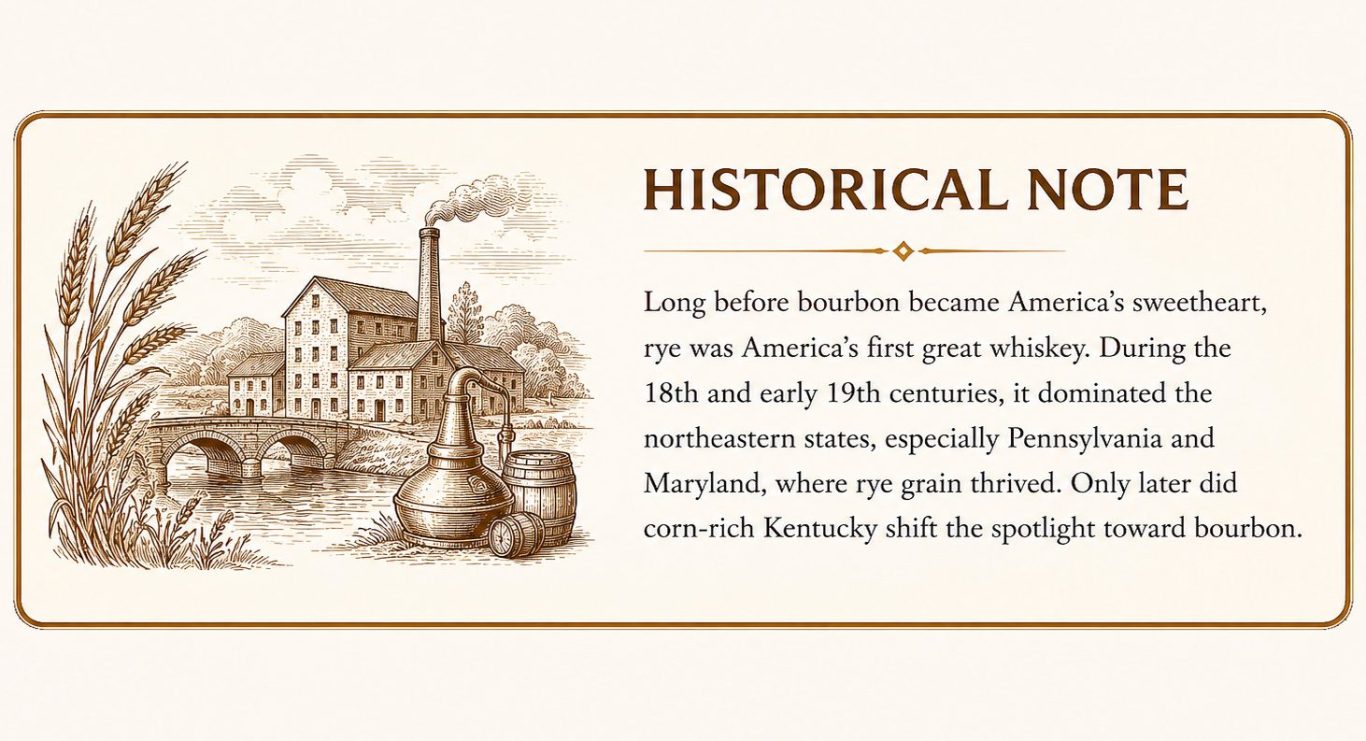
It is, in truth, the original American whiskey. Long before bourbon rose to fame, rye was the everyday spirit of the young United States — distilled across Pennsylvania and Maryland and poured in taverns from Philadelphia to the frontier. Prohibition nearly killed it off, but in recent years rye has come roaring back, carried on a wave of classic cocktails that were rye’s to begin with.
To taste rye is to taste that history: grain bread and black pepper, mint and baking spice, a dry warmth quite unlike bourbon’s caramel sweetness. If bourbon is the open hand of American whiskey, rye is its sharper, more characterful voice.
What Defines Rye Whiskey?
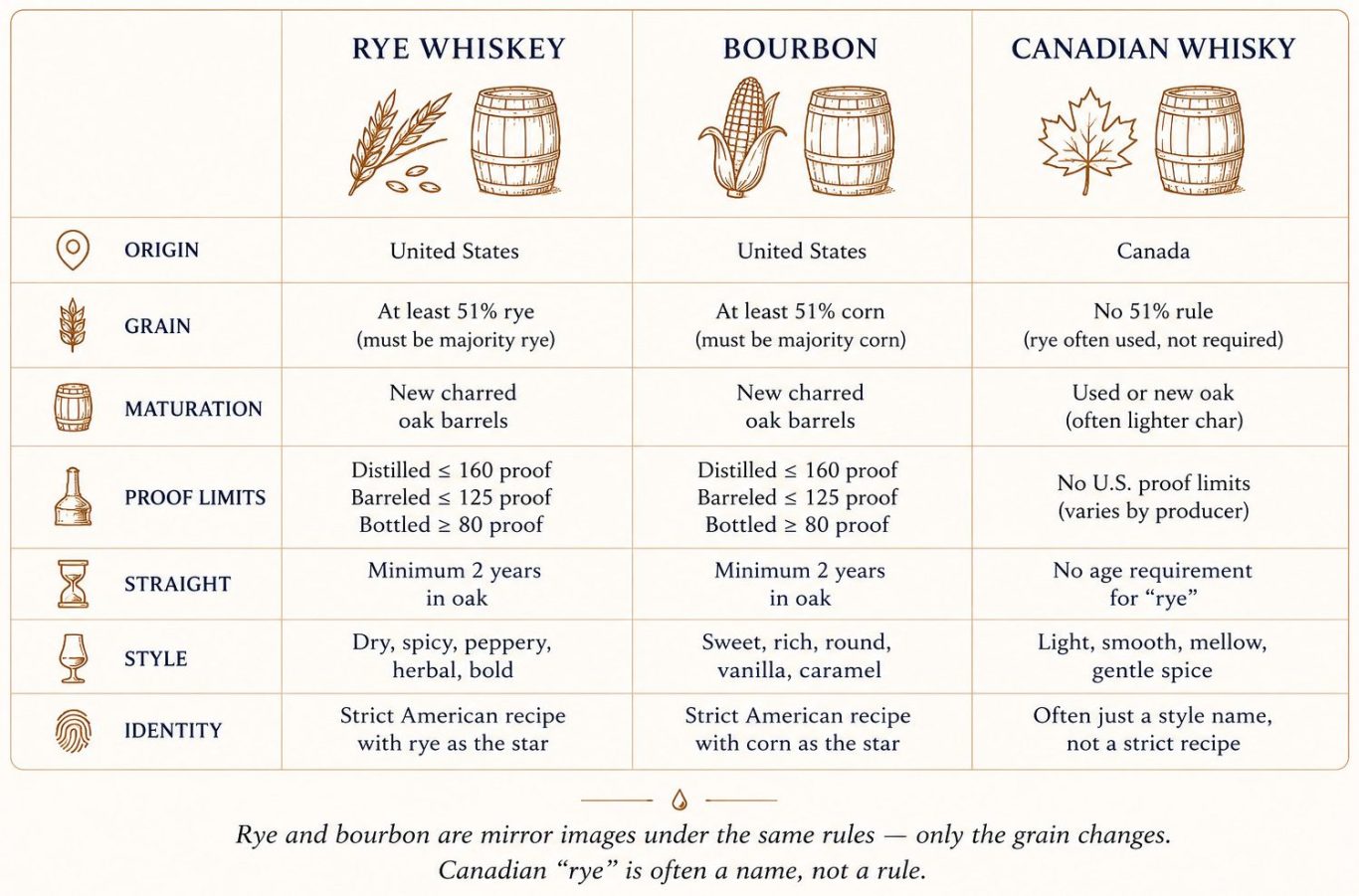
Few American spirits are defined as clearly as rye whiskey. In law, it follows almost exactly the same rules as bourbon, with one decisive difference: the grain at the heart of the recipe. That single substitution transforms the character of the whiskey, replacing bourbon’s sweetness with spice, freshness, and lively intensity.
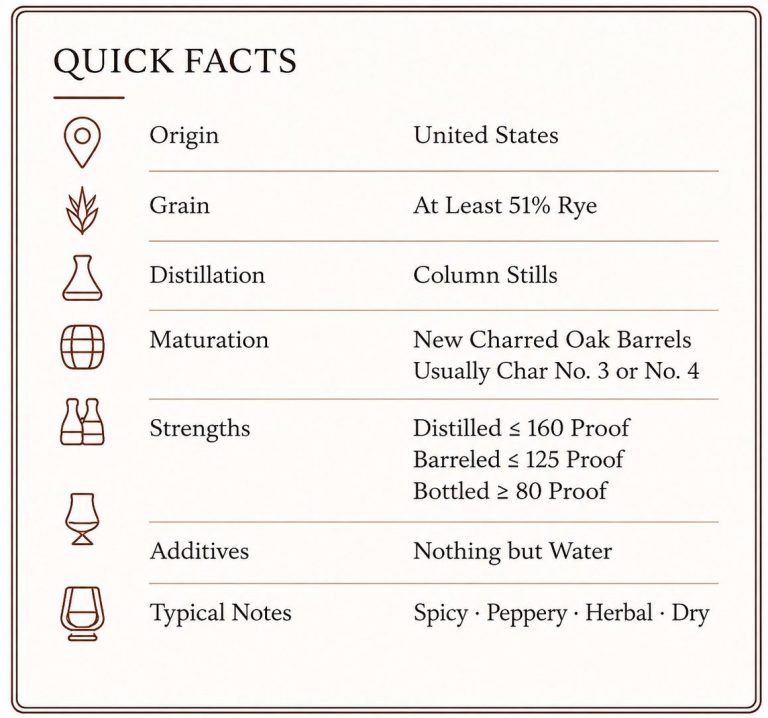
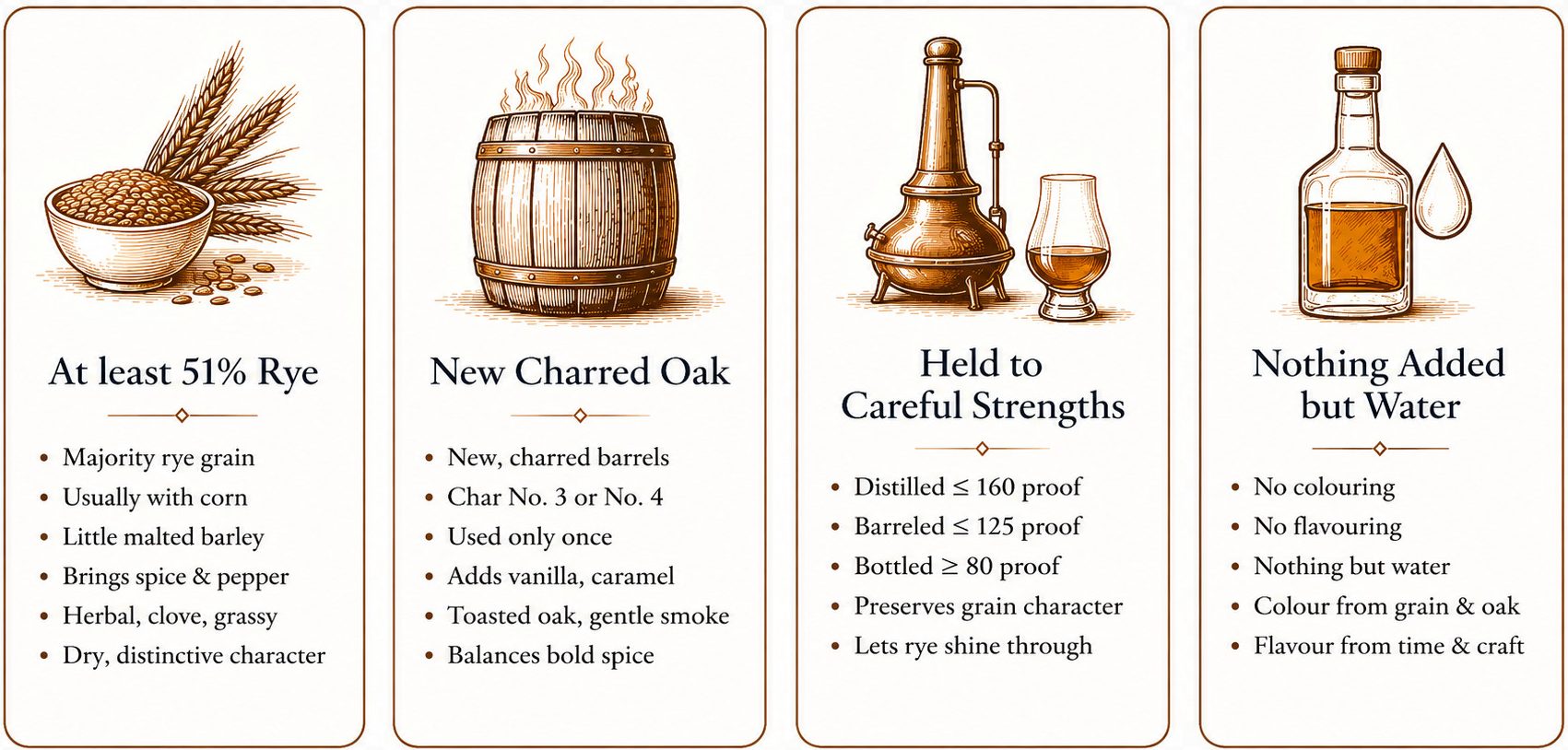
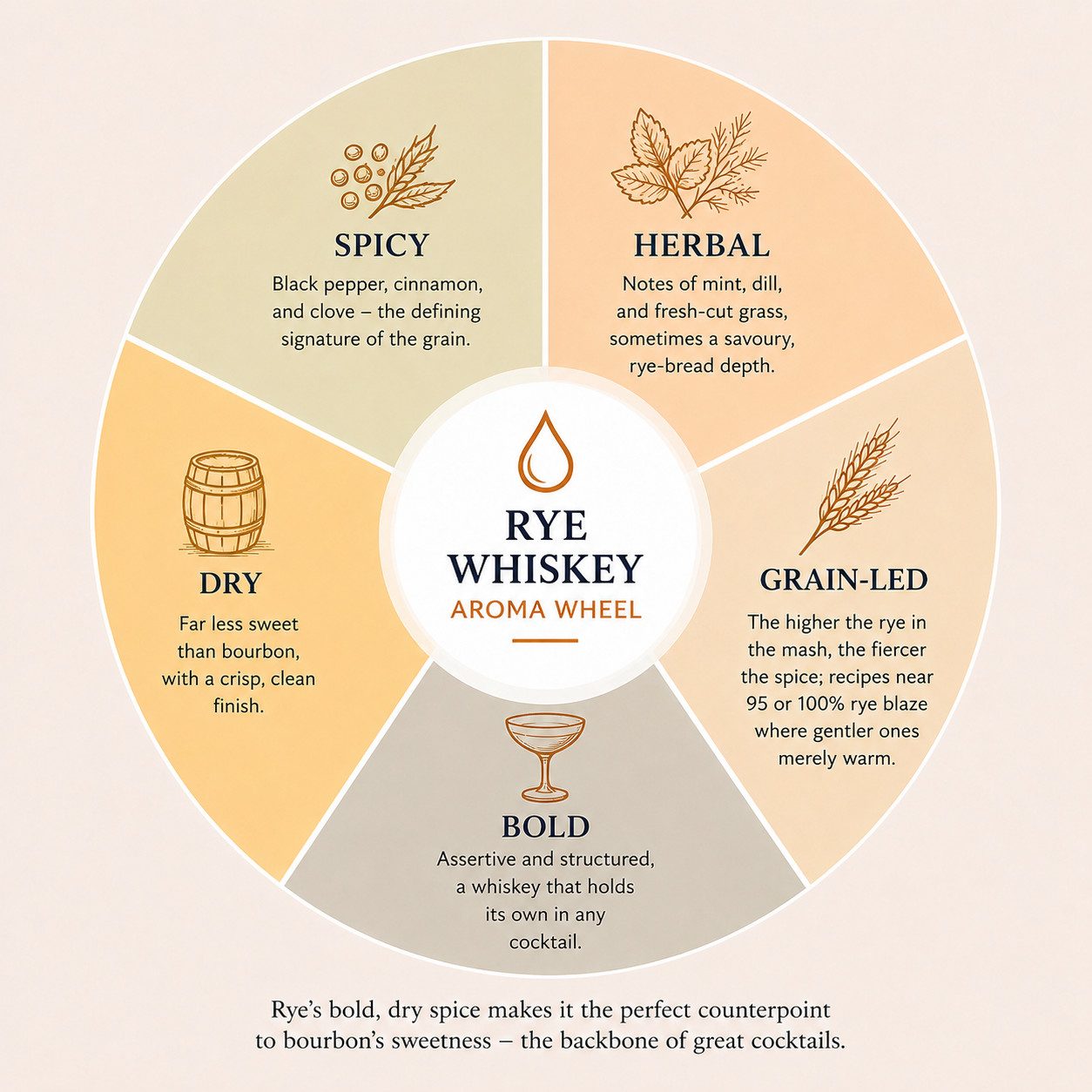
At least 51% rye — the mash bill must contain a majority of rye grain, usually supported by corn for sweetness and a little malted barley to aid fermentation. Rye is responsible for the whiskey’s unmistakable personality, bringing pepper, clove, herbal notes, and a dry, grassy freshness that sets it apart from bourbon.
New charred oak — like bourbon, rye whiskey must mature in brand-new oak barrels that have been heavily charred on the inside. As the spirit moves in and out of the wood through changing seasons, the barrel contributes vanilla, caramel, toasted oak, and gentle smoke, balancing rye’s naturally bold spice.
Held to careful strengths — the spirit may be distilled to no more than 160 proof, entered into the barrel at no more than 125 proof, and bottled at no less than 80 proof. These legal limits ensure that enough grain character remains in the new make for the rye itself to shine through after maturation.
Nothing added but water — rye whiskey contains no added colouring or flavouring. Its deep amber colour and complex flavours develop naturally through the interaction of grain, oak, time, and careful distillation, with water being the only permitted addition to adjust bottling strength.
Straight rye — to carry the designation straight rye whiskey, the spirit must mature for at least two years in its new charred oak barrel. If it is aged for less than four years, the label must also state its age, giving consumers a clear indication of the whiskey’s maturity.
Together these rules create a whiskey that shares bourbon’s legal framework while expressing an entirely different personality. Where bourbon speaks in sweetness and richness, rye answers with pepper, freshness, and vibrant spice—proof that changing a single grain can transform everything in the glass.
How Is Rye Whiskey Made?
Rye follows the same four movements as bourbon, though the grain itself can be a wilful thing to work with.
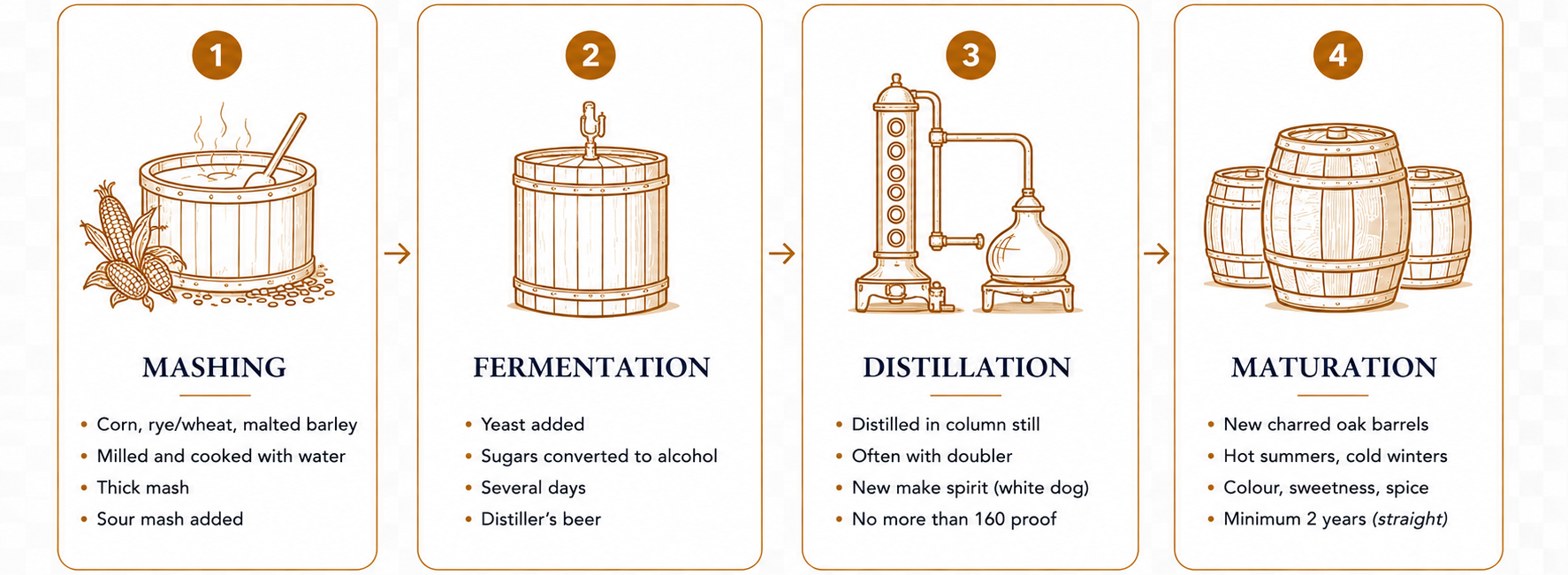
1.) Mashing
It begins with rye, milled and cooked with water alongside its supporting grains. Rye is notoriously sticky and foam-prone — many a distiller has wrestled with its thick, gummy mash — yet it is precisely this grain that carries the spice and character to come.
2.) Fermentation
Yeast is added, and over several days the sugars are converted into alcohol, producing a lively, beer-like wash. Many rye distilleries, like their bourbon neighbours, use a sour mash, adding a little spent mash from the previous batch to keep the flavour true.
3.) Distillation
The wash is distilled, traditionally in a column still followed by a small second still called a doubler, drawn off at no more than 160 proof so the rye’s peppery character survives. A clear new make runs from the still, already bright with grain.
4.) Maturation
Finally the spirit rests in new charred oak. Through the swing of hot summers and cold winters the whiskey moves in and out of the charred wood, gathering colour, vanilla, and a deeper, drier spice — while the angels take their share. Time rounds rye’s sharp edges without ever dulling its bite.
Typical Characteristics
Why Is Rye Whiskey So Popular?
Rye’s journey from near-extinction to fashionable revival is one of the great comeback stories in spirits.
Part of the appeal is heritage. Rye was the whiskey of early America — distilled by farmers and founders alike, George Washington himself among them — and to drink it is to taste a spirit older than the nation’s later fondness for bourbon.
Part of it is the cocktail. The classics of the golden age of mixing — the Manhattan, the Sazerac, the Old Fashioned, the Whiskey Sour — were built for rye’s dry, spicy backbone, and the craft-cocktail revival rediscovered exactly why. Where bourbon can turn a drink sweet, rye keeps it sharp and balanced.
And part of it, simply, is character. In an age that prizes boldness and authenticity, rye offers a whiskey with genuine bite — assertive, historic, and unafraid — rewarding the drinker who likes a little spice with their warmth.
Bourbon vs Scotch and Other Whiskeys
Notable Bourbon Distilleries
The Art of Rye Whiskey
Every rye whiskey begins with a grain that refuses to stay in the background. Where corn offers sweetness and barley brings softness, rye contributes energy, spice, and structure. Its bold personality shapes the whiskey from the very first sip.
The distiller’s craft lies in balancing that intensity. The mash bill, fermentation, careful distillation, and years spent in new charred oak all work together to tame rye’s natural sharpness without taking away what makes it unique. The goal is not to soften rye into bourbon, but to let its character speak with clarity.
Time in the barrel completes the transformation. Fresh oak layers vanilla, caramel, and toasted wood over the grain’s peppery heart, creating a whiskey that is both lively and refined. What begins as youthful spice gradually develops into depth and elegance.
Great rye whiskey is a study in contrast. Bold yet balanced. Dry yet rich. Vibrant yet complex. It is a spirit that rewards attention, revealing new aromas and flavours with every glass.
Character. Spice. Balance.
Frequently Asked Questions
Is rye whiskey always made from 100% rye?
No. By law, American rye whiskey must contain at least 51% rye grain. The remaining mash bill usually includes corn and malted barley to balance flavour and support fermentation.
What makes rye whiskey different from bourbon?
The main difference is the grain. Rye whiskey is made with at least 51% rye, while bourbon uses at least 51% corn. As a result, rye is typically drier, spicier, and more herbal than bourbon.
Why is rye whiskey so spicy?
Rye grain naturally produces flavours of black pepper, cinnamon, clove, mint, and herbs. Combined with new charred oak barrels, these notes create rye’s bold and distinctive character.
Is rye whiskey matured in the same barrels as bourbon?
Yes. Like bourbon, American rye whiskey must mature in new charred oak barrels. These barrels contribute vanilla, caramel, toasted oak, and gentle smoky notes during maturation.
Is Canadian rye the same as American rye?
Not necessarily. In the United States, rye whiskey must contain at least 51% rye grain. In Canada, the term rye is often a traditional style name, and the whiskey may contain much less rye—or none at all.
Is rye whiskey only for cocktails?
Not at all. Rye is famous in classics such as the Manhattan and Sazerac, but many premium bottlings are equally rewarding enjoyed neat or with a few drops of water.
Related Articles

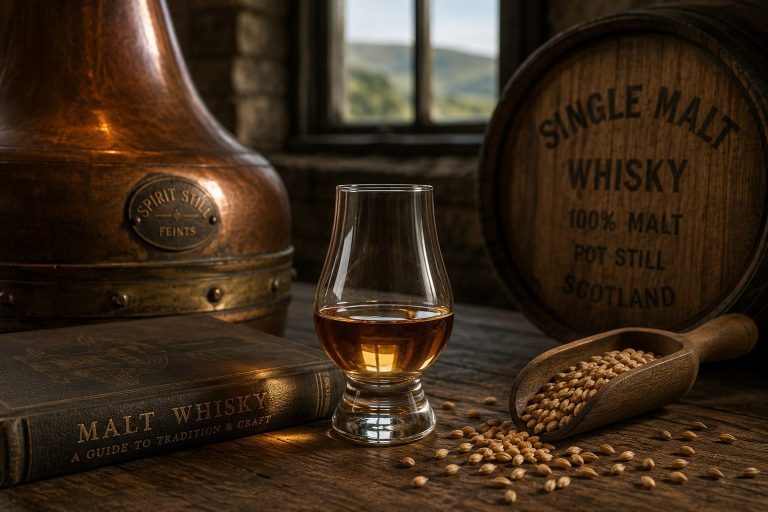
What is Single Malt Whisky?
World’s most respected whisky style.
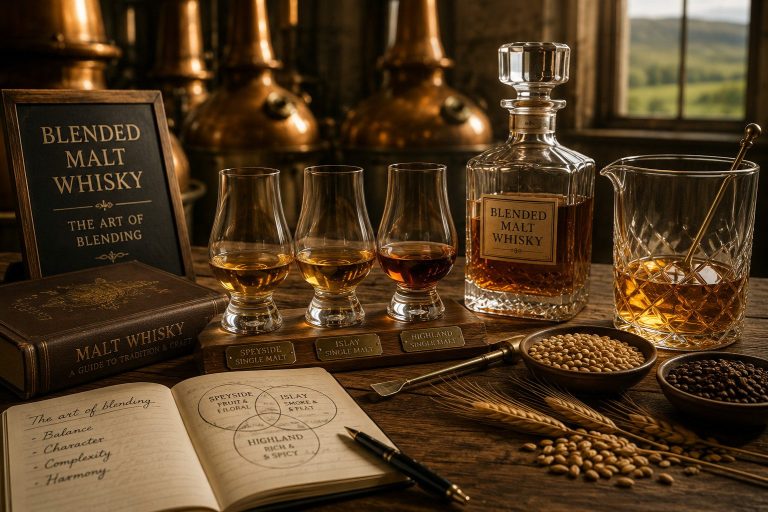
What is Blended Malt Whisky?
The art of blending malt whiskies.
What is Blended Malt Whisky?
The art of blending malt whiskies.
What is Blended Malt Whisky?
The art of blending malt whiskies.
What is Blended Malt Whisky?
The art of blending malt whiskies.
What is Blended Malt Whisky?
The art of blending malt whiskies.
Keep Exploring
Every whisky tells a different story. Continue exploring styles, regions, production methods and the fascinating world behind the spirit.
Discover how ingredients, distillation and maturation shape each whisky’s unique character. Every article adds another piece to the bigger picture.
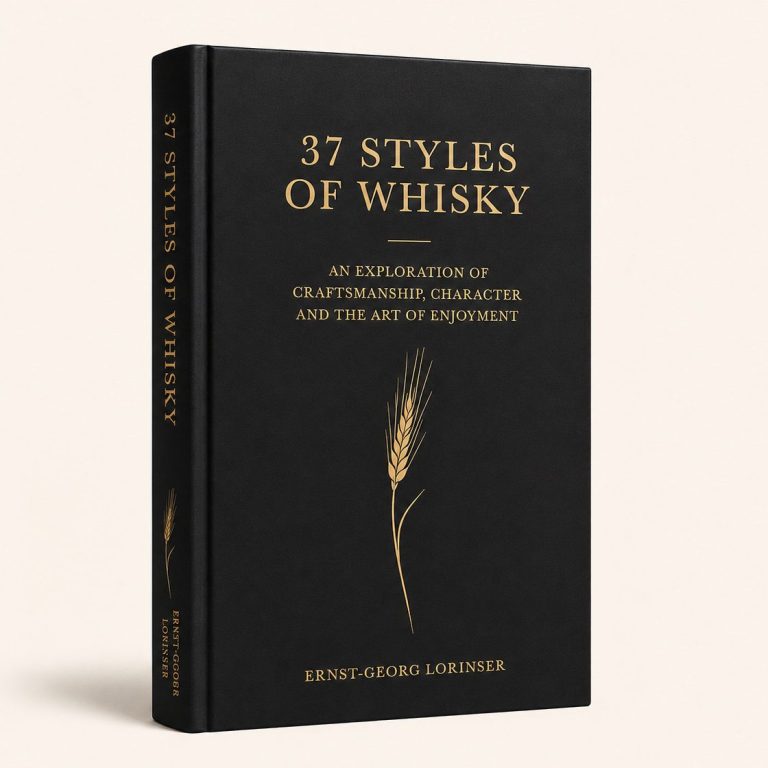
Go Deeper in the Book
Our book 37 Styles of Whisky takes you on a detailed journey through the world’s most important whisky styles, with stories, expert insights and a wealth of whisky knowledge.