
What Is
Bourbon?
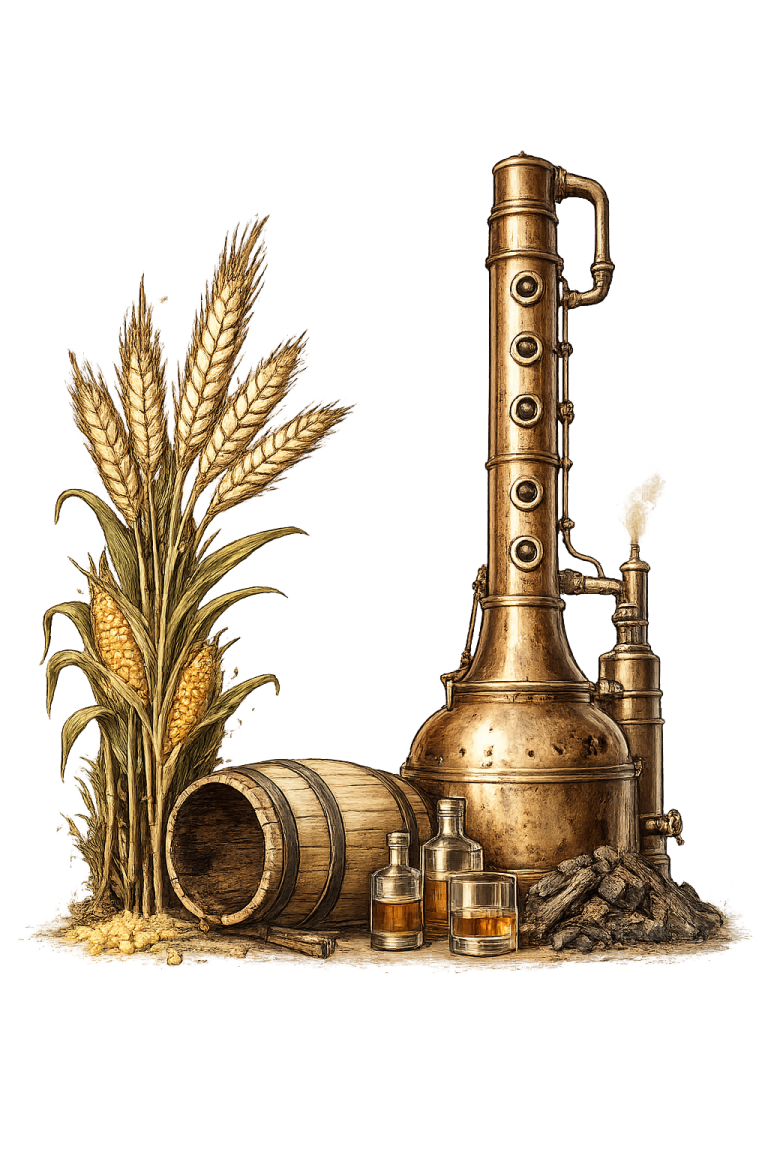
Bourbon is America’s native whiskey, crafted primarily from corn and matured in new charred oak barrels. Rich in sweetness, vanilla and oak, it embodies warmth, generosity and the unmistakable character of American whiskey.
Sweet. Rich. Unmistakably American.
Introduction
Bourbon is America’s native spirit — a whiskey made principally from corn and aged in new charred oak, born in the limestone country of Kentucky and now poured the world over. Where Scotch speaks of mist and malt, bourbon speaks of sunshine and grain: sweeter, rounder, and unmistakably American.
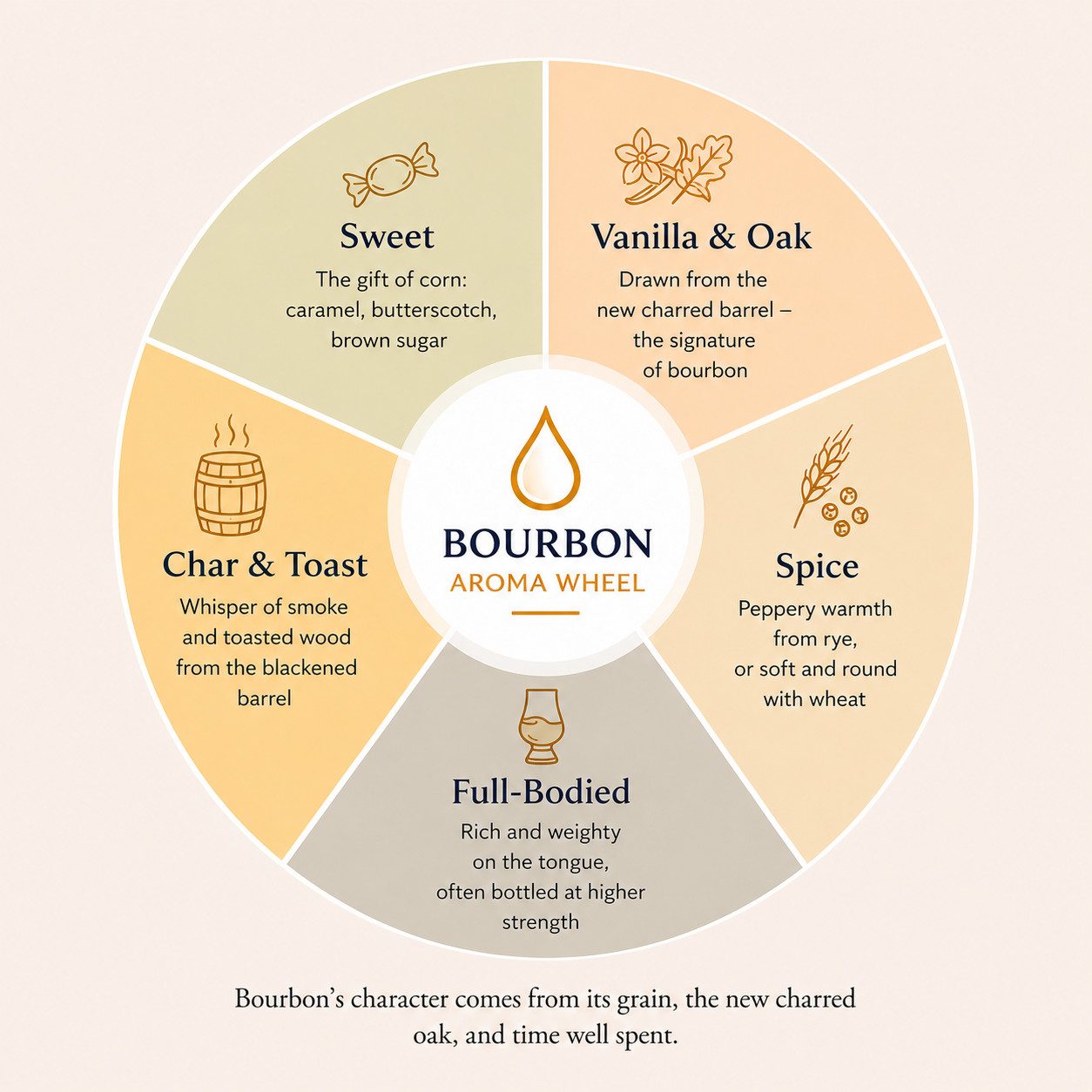
The name carries a whole landscape with it. By law it may be made anywhere in the United States, yet its heart lies in Kentucky, where the water runs clear over limestone and the summers are hot enough to drive the whiskey deep into the wood. To pour a glass of bourbon is to taste caramel, vanilla, and char — the signature of corn and fresh oak meeting fire.
If single malt is a spirit of place and patience, bourbon is a spirit of generosity and warmth. It is built to be welcoming: rich, sweet, and approachable — the open hand of the whiskey world.
What Makes a Whiskey Bourbon?
Few spirits are defined as strictly as bourbon. American law sets out exactly what may carry the name, and each rule shapes the character in the glass.
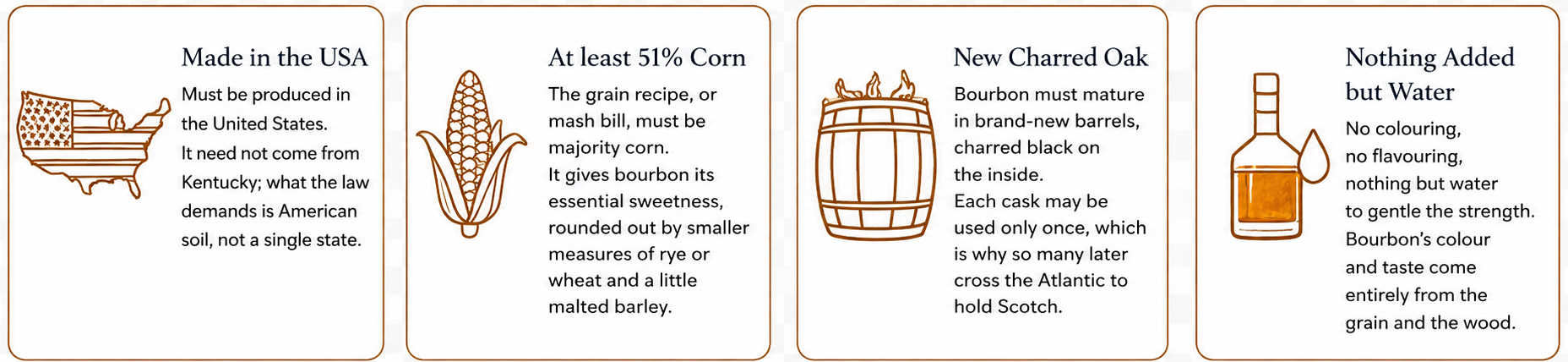
Made in the USA — bourbon must be produced in the United States. It need not come from Kentucky, though the great majority does; what the law demands is American soil, not a single state.
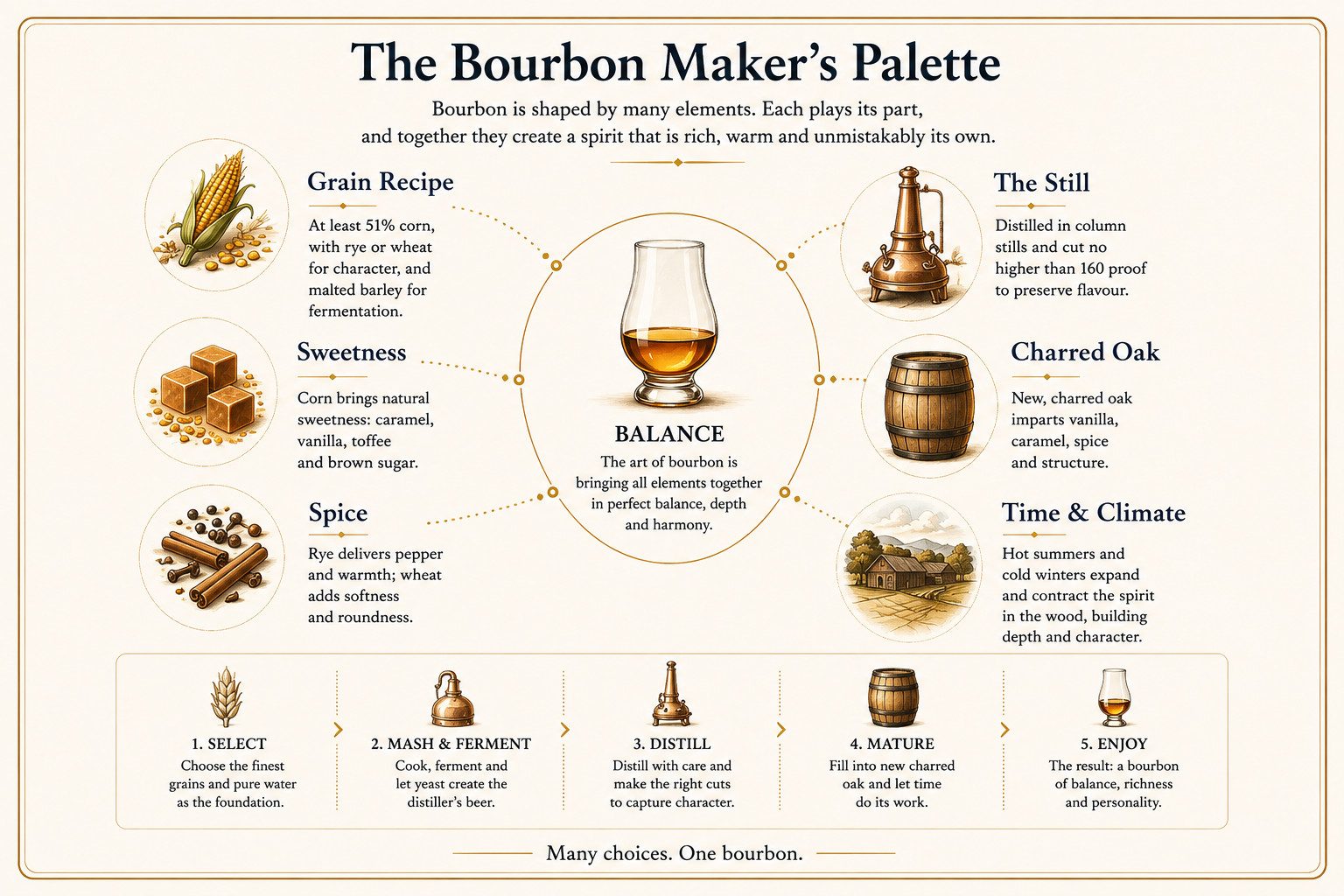
At least 51% corn — the grain recipe, or mash bill, must be majority corn. It is corn that gives bourbon its essential sweetness, rounded out by smaller measures of rye or wheat and a little malted barley.
New charred oak — bourbon must mature in brand-new barrels, charred black on the inside. Each cask may be used only once, which is why so many later cross the Atlantic to hold Scotch.
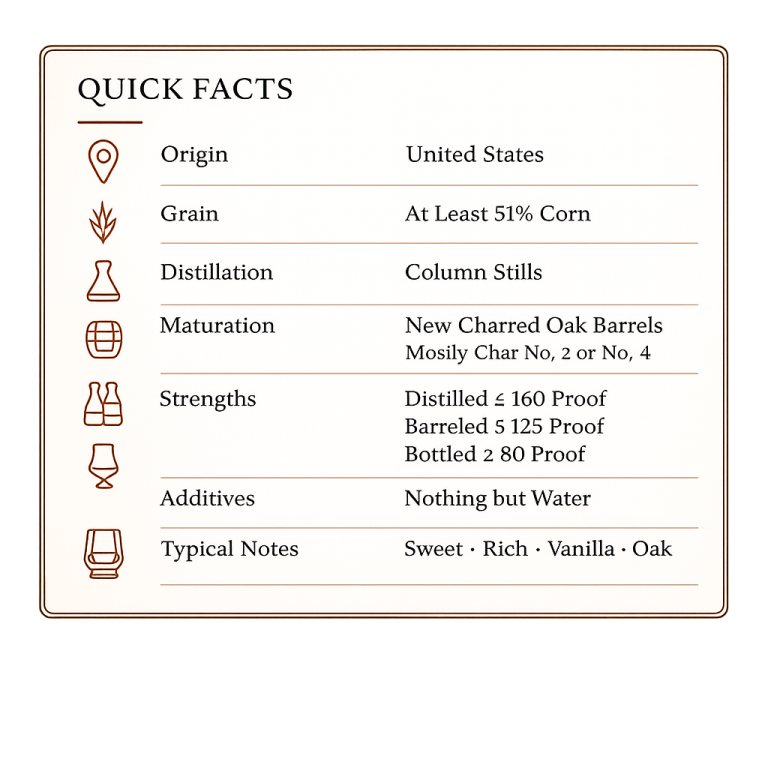
Held to careful strengths — it must be distilled to no more than 160 proof, filled into the barrel at no more than 125, and bottled at no less than 80. These limits keep enough flavour in the spirit to matter.
Nothing added but water — no colouring, no flavouring, nothing but water to gentle the strength. Bourbon’s colour and taste come entirely from the grain and the wood.
Together these rules make a quiet guarantee of their own: American corn, new charred oak, and not a shortcut in sight.
How is Bourbon Made?
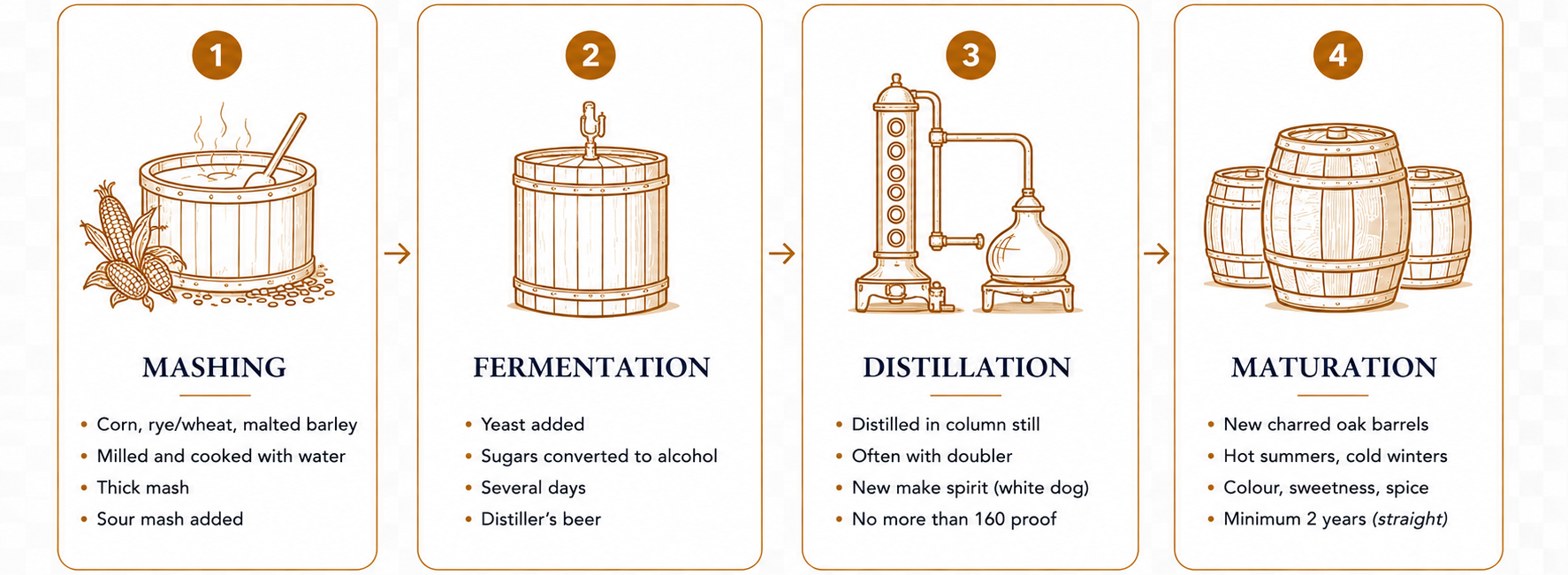
The making of bourbon follows four great movements, much like any whiskey, yet each carries an American accent.
1.) Mashing
It begins with corn and its companions. The grains — corn first, then a measure of rye or wheat for character, and a little malted barley to help things along — are milled and cooked with water into a thick, porridge-like mash. Many distilleries stir in a portion of spent mash from the previous batch, the sour mash, to keep the flavour consistent from one run to the next.
2.) Fermentation
Yeast is added to the cooled mash, and fermentation begins. Over several days the sugars drawn from the corn are devoured and turned to alcohol, leaving a sweet, beer-like liquid known as the distiller’s beer — the foundation of everything to come.
3.) Distillation
The beer is distilled, traditionally in a tall column still rather than the pot stills of Scotland, often followed by a second small still called a doubler. From it runs a clear, sweet spirit — new make, affectionately called white dog — drawn off at no more than 160 proof so that the character of the grain survives the fire.
4.) Maturation
Then comes the wood, and the fire within it. The spirit is filled into new oak barrels whose insides have been charred black, and left to rest. Through Kentucky’s hot summers and cold winters the whiskey swells into the wood and shrinks back out again, drawing colour, sweetness, and spice from the charred oak — and surrendering its angels’ share to the warm air. There is no minimum by law, but to be called straight bourbon it must sleep at least two years.
Typical Characteristics
Why Is Bourbon So Popular?
Bourbon’s rise from frontier whiskey to global icon is one of the great American success stories.
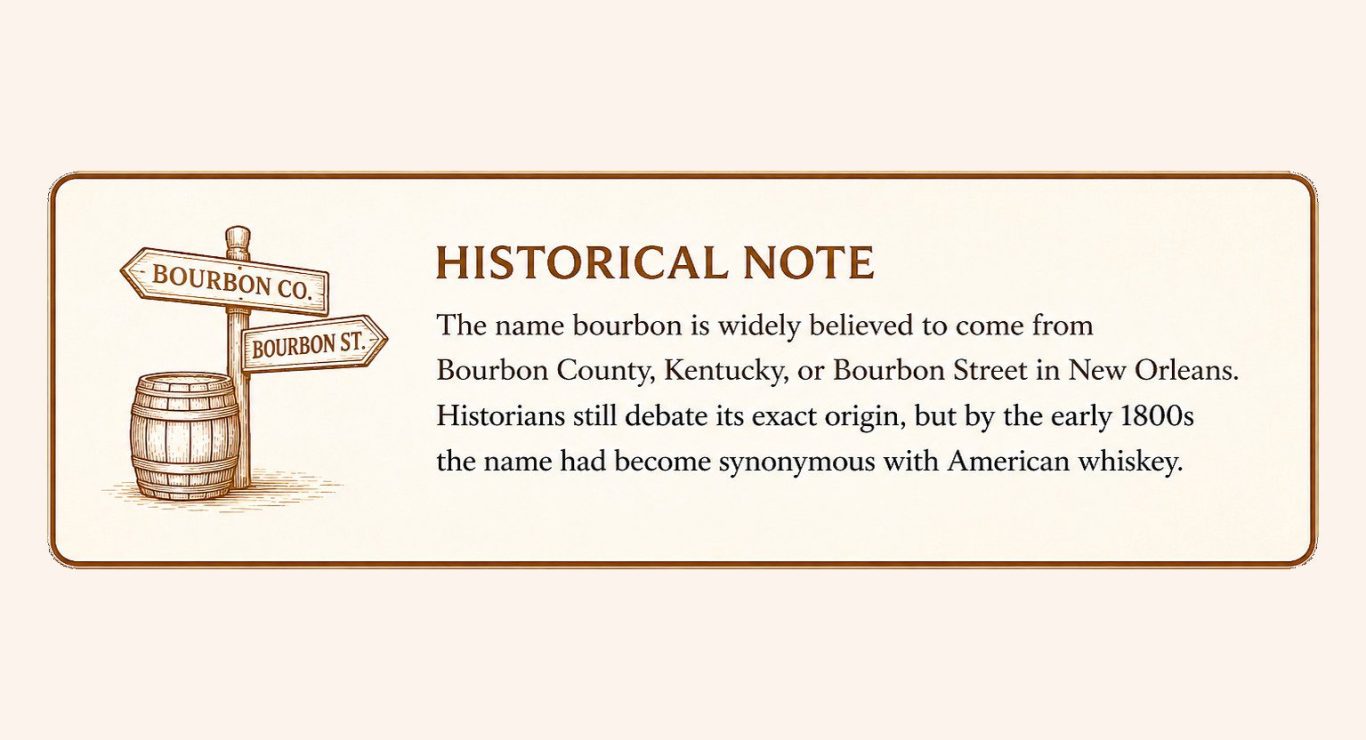
Part of the appeal is heritage. Recognised by Congress in 1964 as a distinctive product of the United States, bourbon carries the romance of the American frontier — of Kentucky limestone, charred oak barrels, and a craft handed down through generations.
Part of it is approachability. Bourbon’s natural sweetness makes it one of the easiest whiskeys to love, equally at home sipped neat over ice or anchoring a classic cocktail such as the Old Fashioned, the Manhattan, or the Mint Julep.
And part of it, simply, is variety and value. From gentle wheated bottlings to fiery cask-strength releases, bourbon offers enormous range — often at a kinder price than its Scottish cousins — and rewards the curious drinker with a whole country’s worth of character to explore.
Bourbon vs Scotch and Other Whiskeys
Notable Bourbon Distilleries
The Art of Bourbon
Bourbon is not the result of a single grain or a single distillery, but of a precise process and many small choices made with care.
From the grain recipe to the char on the barrel, from the cut in the still to the years in the warehouse, every decision shapes the final character.
The art of bourbon lies in bringing all these elements together in harmony - sweet yet complex, bold yet balanced, with a distinct sense of place.
Grain. Fire. Wood. Time. Balance.
That is the art of bourbon.
Frequently Asked Questions
Is bourbon always made in Kentucky?
No. Bourbon can be produced anywhere in the United States. Kentucky makes around 95% of all bourbon, but the law requires only that it is made in the USA.
Why are bourbon barrels used only once?
American law requires bourbon to mature in new charred oak barrels. After one use, the casks are often sold to mature Scotch whisky, Irish whiskey, rum, and many other spirits.
Is bourbon sweeter than Scotch?
Usually, yes. The high proportion of corn and the influence of new charred oak create notes of vanilla, caramel, and brown sugar that make bourbon naturally sweeter.
Does older bourbon always taste better?
Not necessarily. Longer maturation adds more oak influence, but too much time in the barrel can make bourbon overly woody. Balance matters more than age.
Can bourbon be smoky?
Yes—but differently from Scotch. Bourbon’s smoky notes come from the charred oak barrel, not from peat smoke used in some Scottish whiskies.
What is the difference between bourbon and Tennessee whiskey?
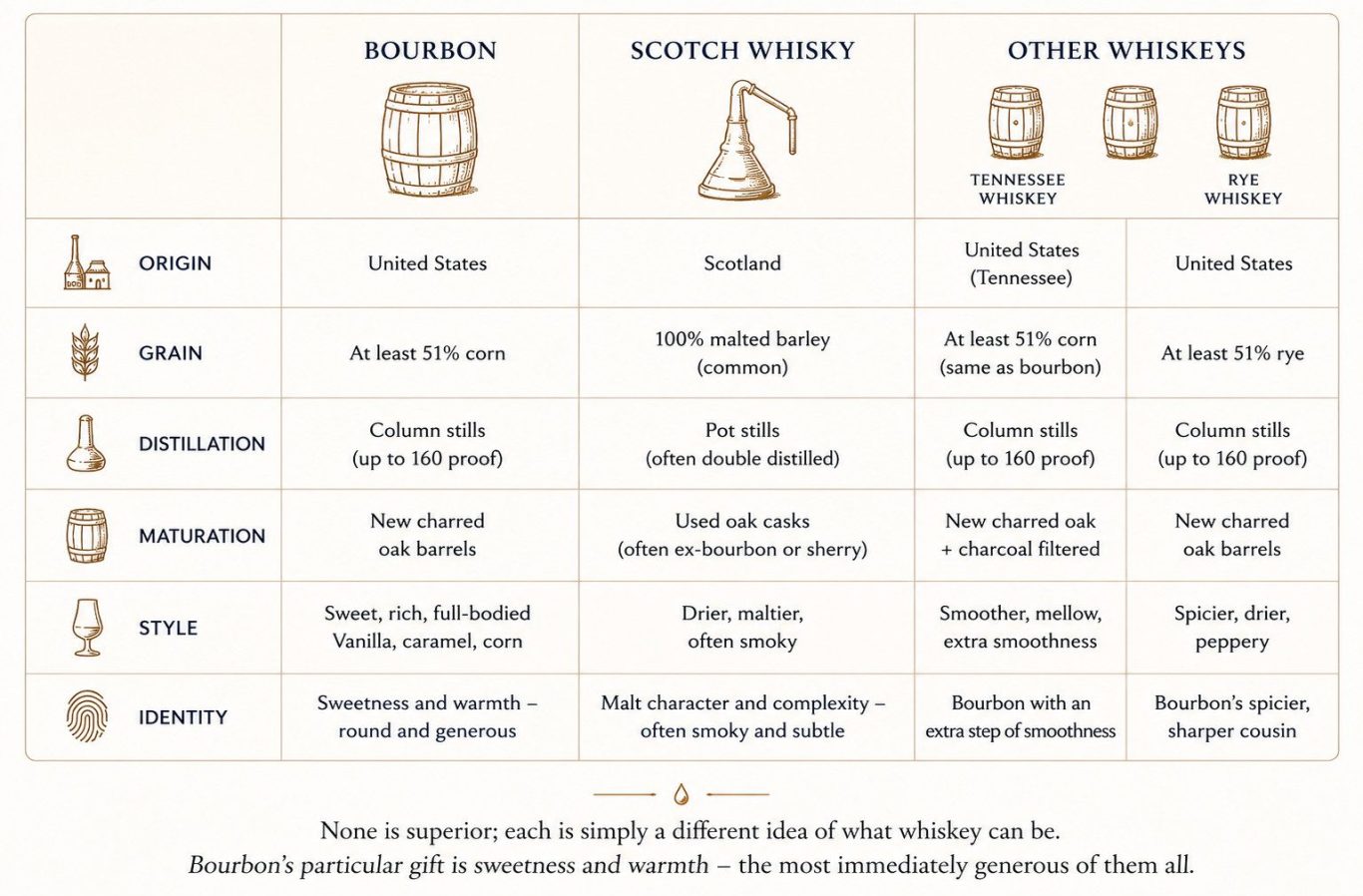
Tennessee whiskey meets all the legal requirements for bourbon but is filtered through sugar-maple charcoal before maturation. This extra step, known as the Lincoln County Process, creates a smoother character.
Related Articles
What is Single Malt Whisky?
World’s most respected whisky style.
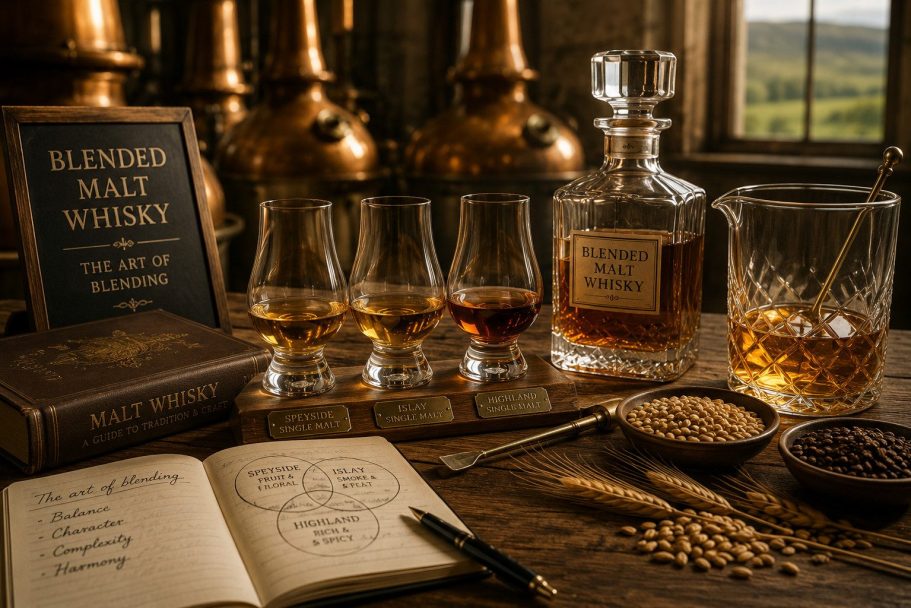
What is Blended Malt Whisky?
The art of blending malt whiskies.
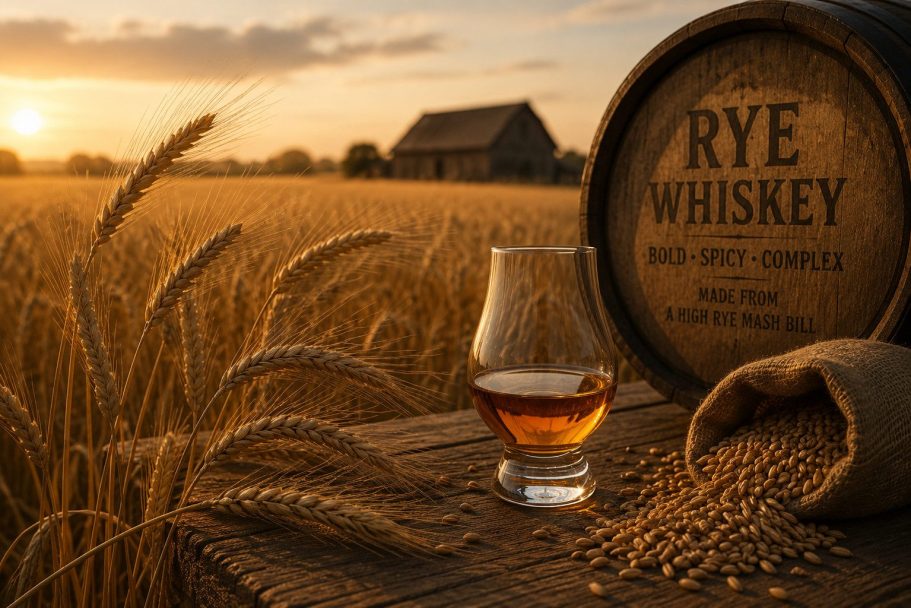
What is Rye Whiskey?
America’s spicier whiskey.
Keep Exploring
Every whisky tells a different story. Continue exploring styles, regions, production methods and the fascinating world behind the spirit.
Discover how ingredients, distillation and maturation shape each whisky’s unique character. Every article adds another piece to the bigger picture.
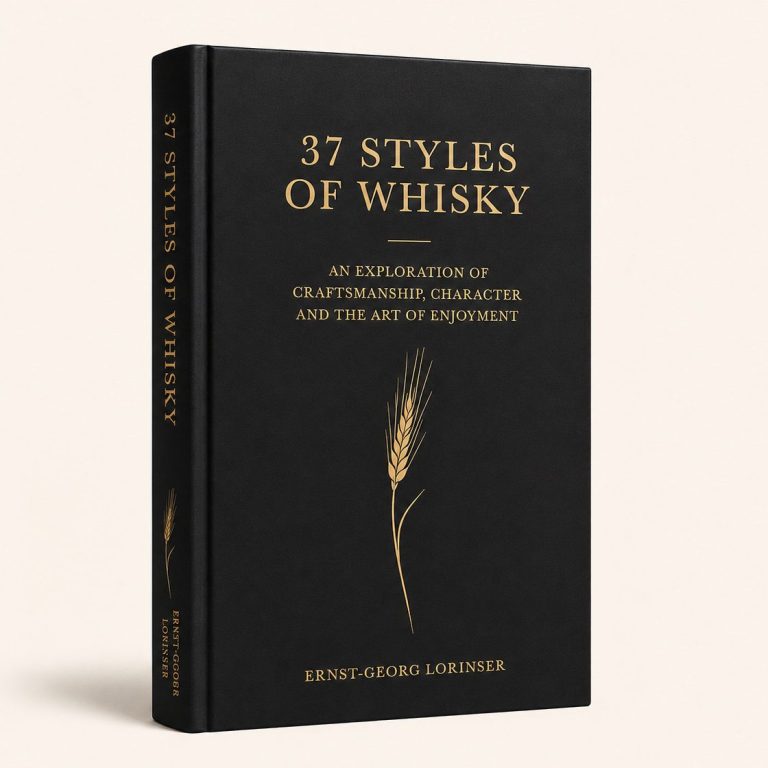
Go Deeper in the Book
Our book 37 Styles of Whisky takes you on a detailed journey through the world’s most important whisky styles, with stories, expert insights and a wealth of whisky knowledge.